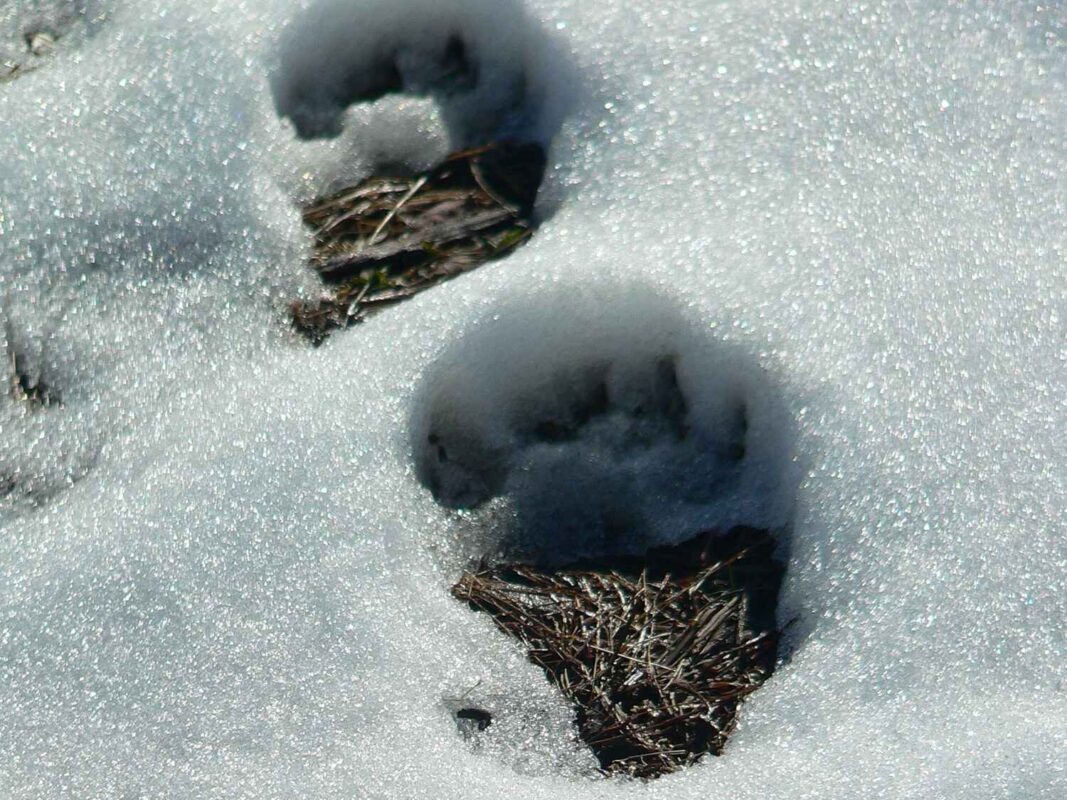
These tracks feature an oblong shape, melted snow conditions, and distinct claw marks. What else do you notice?
Tracking can help us connect with animals as they move across the landscape. And it’s fun! The practice can build focus, help you set aside stress, and let you be in the zone with the tracks. It’s great for building human relationships, too.
Our top tip for tracking? Don’t get caught up in having the right answer.
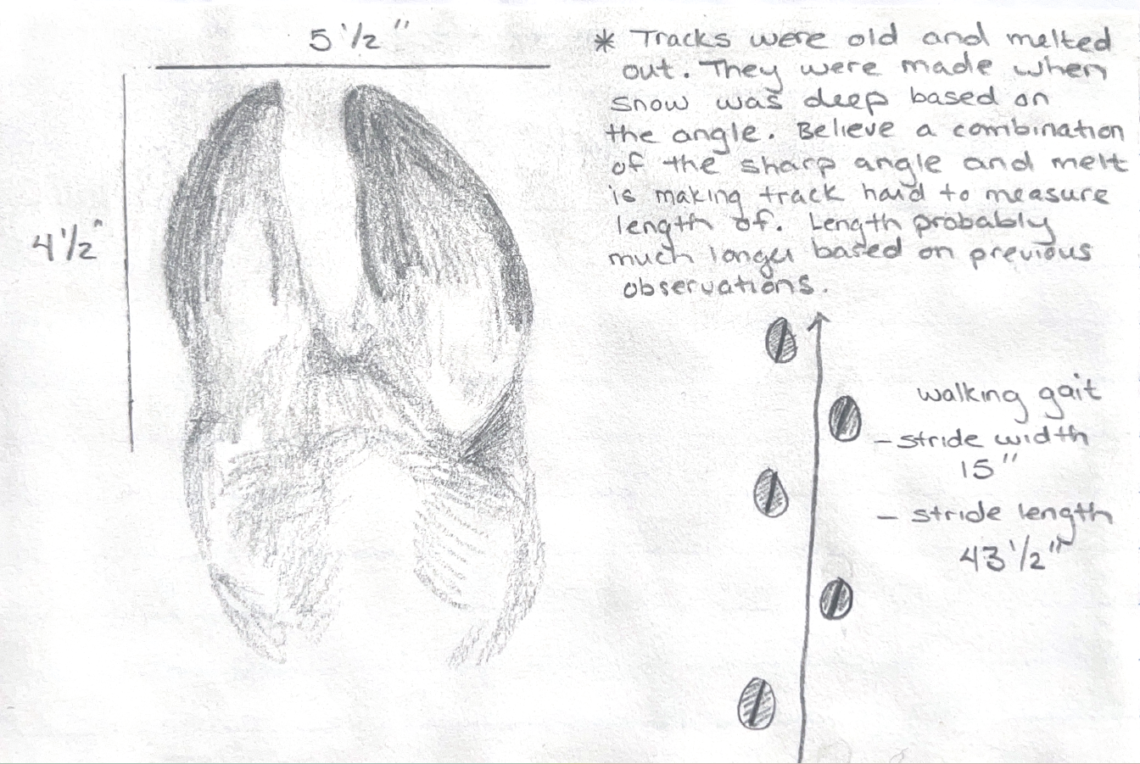
Tracking notes example by Jess Applin.
“I want you to forget what you think you know about tracking,” says HLT staff member and wildlife tracker Jess Applin. “Don’t try and identify the track right away. The mind has a funny way of getting in the way and making up stories. Just observe what you’re actually seeing.”
Next time you spot a track, try asking these 10 questions!
Get up close and personal
- What size is the track?
- What shapes do I see? Circles? Ovals? Points?
- How many toes do I see?
- What clues tell me how old the track is? Is it fresh, melted, or covered over by snow?
The animal’s path
- What does the animal’s stride look like?
- Where did the animal come from, and where is it going?
Look up and around you
- What habitat am I in?
- What is the surrounding landscape like?
- What weather conditions have impacted the track since it was made?
- What animals might be found here?
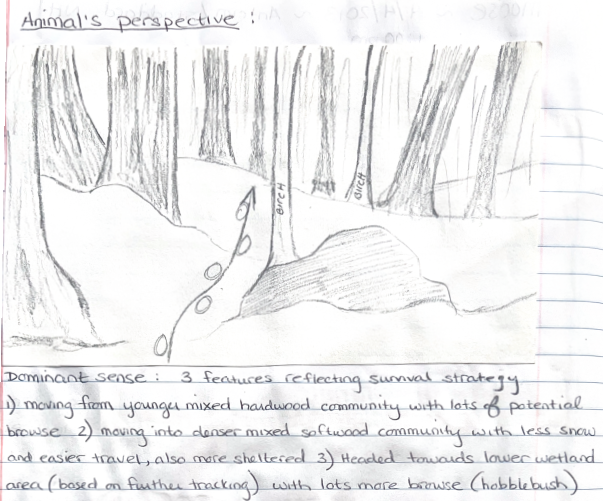
Tracking notes example by Jess Applin.
Next time you spot a track this winter, try pausing to ask these questions—or even jot down notes in a journal. You might surprise yourself with how much you see.
Make tracks for wildlife with a gift today.
Your gift conserves the land that moose, bobcats, and bears need. Make a tax-deductible donation today to help protect their homes.