What do these hemlock-loving creatures tell us about the health of local forests?
By Calla Jones, TerraCorps Land Stewardship Coordinator
Porcupines make their business known. A recent monitoring visit to HLT conservation land in Westhampton brought me to a porcupine den where all the evidence of the life of a porcupine was on display. The den, an opening beneath a large rock ledge, was piled with scat.
I followed a well-trodden and pee-smeared trail through the snow to a grove of hemlocks nestled above the rocky ledge. Several of the hemlocks had been heavily picked over by the porcupines, their crowns pruned into odd shapes. The porcupines’ tracks led to their current food source, a tree covered in scratch marks with a messy nest perched in its branches. The ground around the tree was littered with branch clippings.
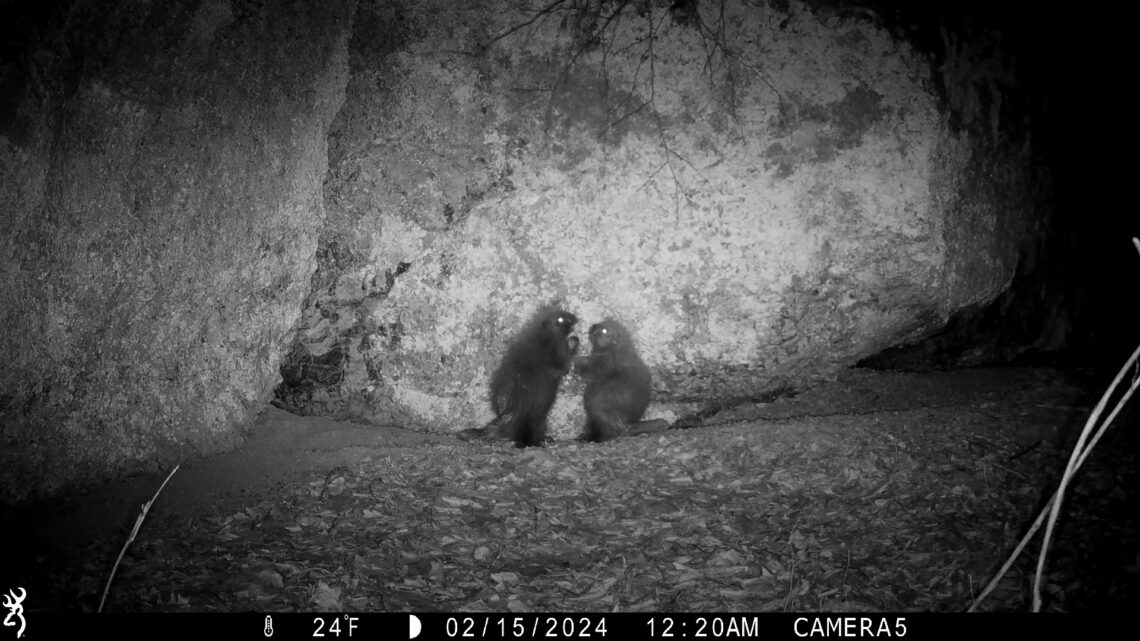
At a Westhampton porcupine den, we watched these young porcupines play fighting just outside the den entrance. Can you spot the large pile of porcupine scat to their left?
One den, many species
I spotted deer tracks crossing through the grove. Porcupine clippings provide easy winter food for hares and deer. Through their constant nibbling and disposal of clippings, porcupines create a kind of wintertime hub for wildlife within hemlock groves. A trail camera aimed at the den allows us to monitor these animal interactions. In addition to porcupine; bobcat, coyote, raccoon, and bear are frequently captured on the camera. Trail camera footage along with monitoring visits allow us to keep tabs on this plant and animal community.
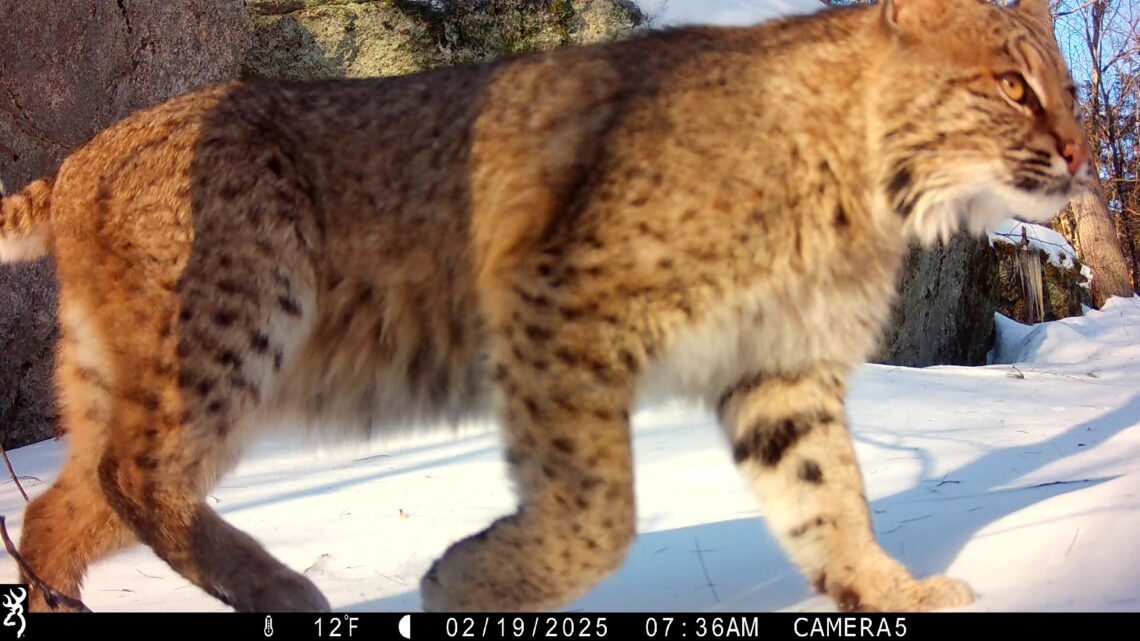
This bobcat travels frequently past the porcupine den.
Wooly adelgid: A threat to porcupine habitat
Monitoring visits also allow us to evaluate a major threat to porcupine habitat: hemlock woolly adelgid. Woolly adelgid is an invasive insect that feeds on the twigs of hemlocks and threatens to wipe out the species in our region. It is easily identifiable by the small “woolly” balls the aphid builds on the underside of needles. Researchers are working to develop effective and holistic adelgid treatments and to propagate populations of resistant trees, referred to as “lingering hemlocks.” Individual trees can be treated with pesticides but need to be retreated every few years.
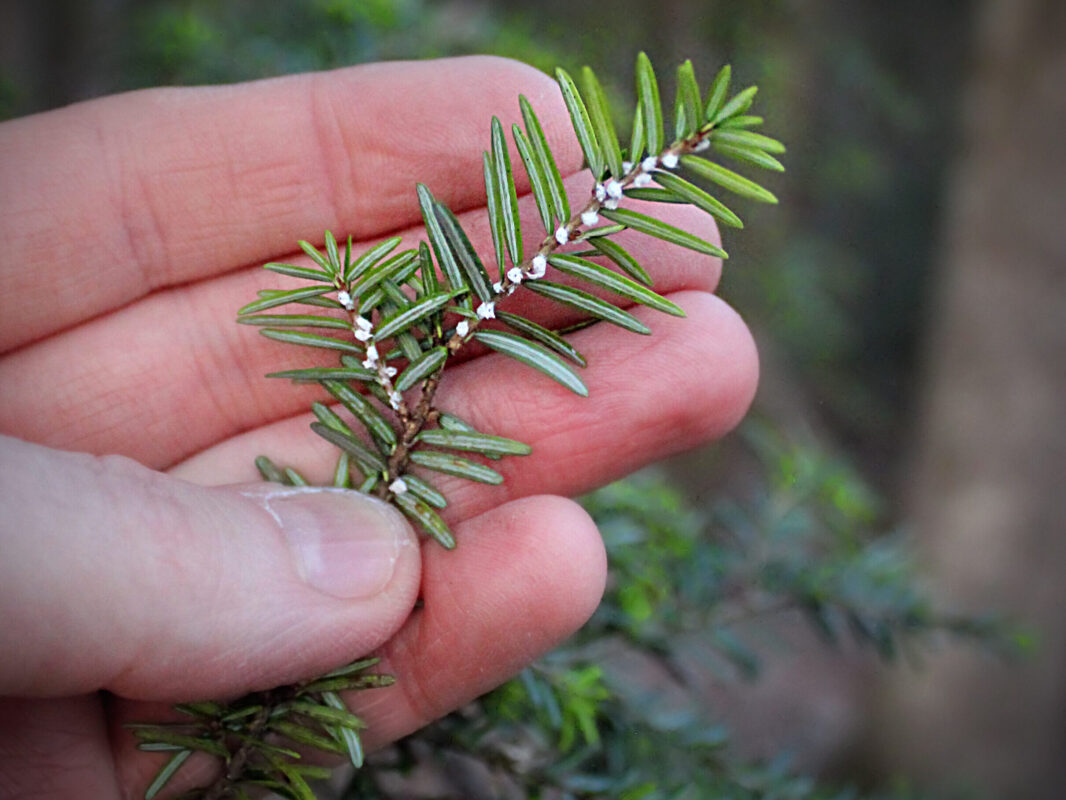
Hemlock wooly adelgid appears as white fuzzy balls on the underside of hemlock branches. Photo by Nicholas Tonelli.
Researchers are experimenting with introducing several species of insects that feed on woolly adelgid, acting as a biocontrol. Other research focuses on identifying, studying and breeding lingering hemlocks. Unusually low temperatures are also known to cause mass adelgid die-off. Perhaps this winter did some damage? As forest stewards, it is important for us to monitor woolly adelgid populations in our forests over time in order to identify pockets of resiliency.
Stewarding resilient habitats
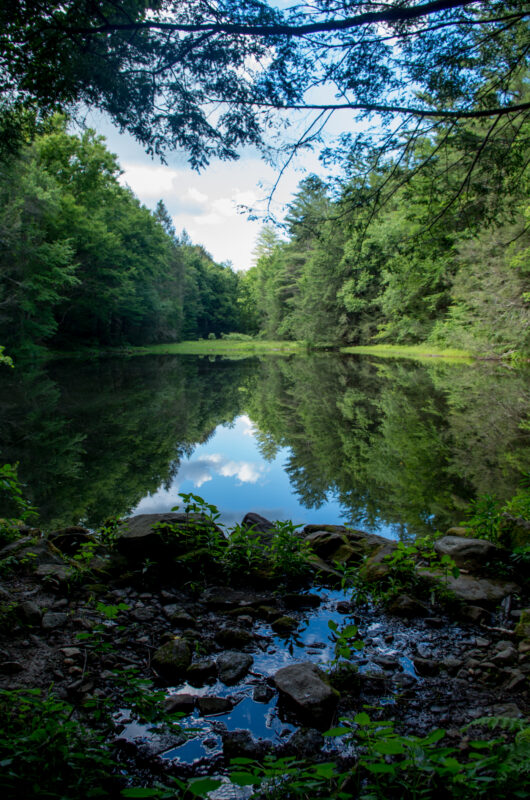
Hemlocks aren’t just important for porcupines! Hemlocks not only provide critical wildlife habitat, they also support the health of clean and cold streams by providing shade and preventing bank erosion. Stream health protects quality drinking water and supports native trout species. Hemlocks are often the only coniferous tree in otherwise deciduous forests, bringing valuable diversity to the landscape.
Next time you’re out in the woods, see if you can spot any of the tell-tale signs of porcupine. While you search for rocky ledges, scattered branch clippings, and scat piles, look for woolly adelgid on the undersides of hemlock needles. Monitoring hemlocks and understanding the threat they face is essential. While you’re at it, be sure to look up and appreciate these wonderous conifers that are so beneficial to our ecosystems.
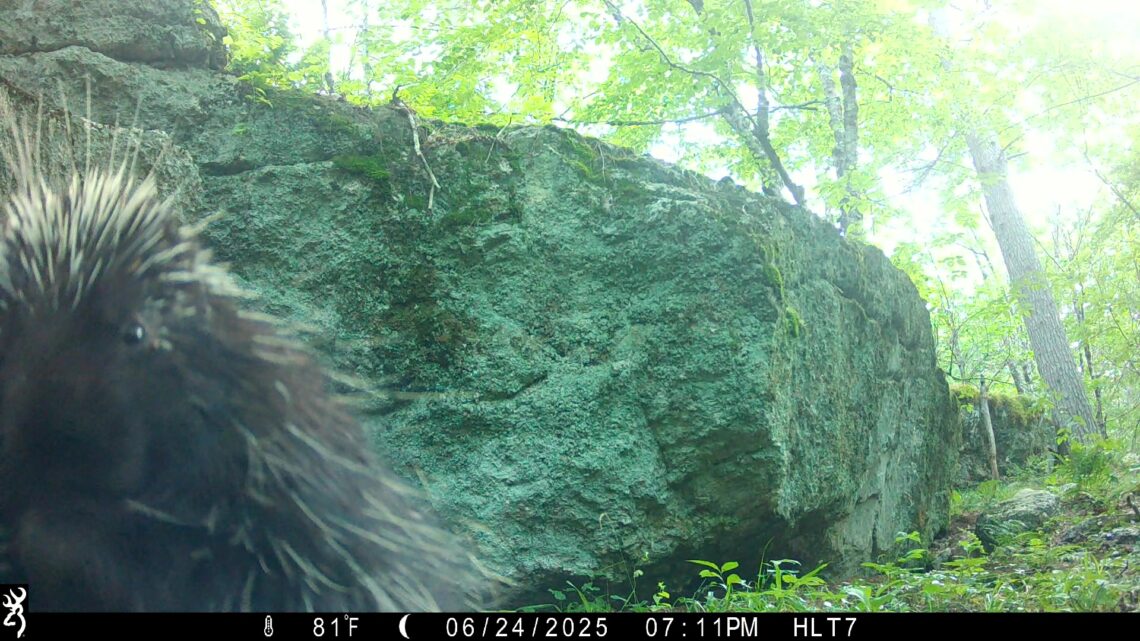
A porcupine inspects our wildlife camera outside its den in Westhampton.