One Huntington family’s journey to conserving critical habitat
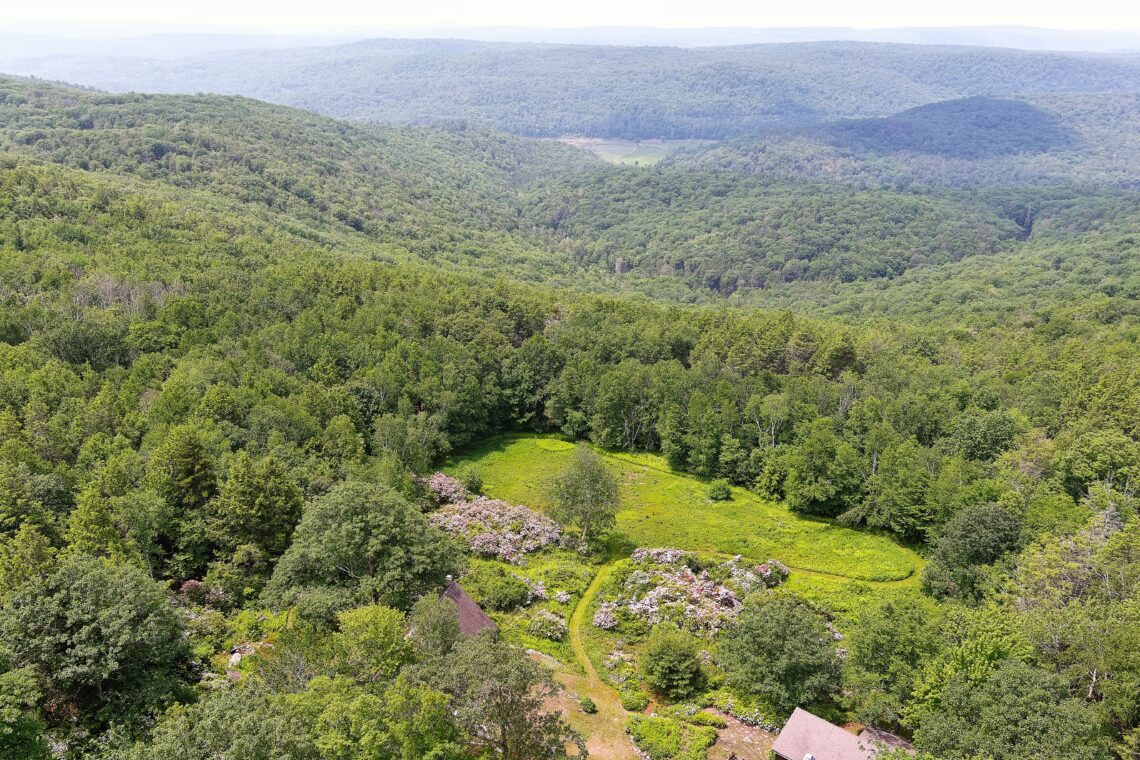
This forest is a stop on the wildlife highway from the Appalachians to Canada. Photo by Friedman family.
Last August, Carolyn and John Friedman saw a moose in the meadow below their house for the first time. Carolyn, whose family has been coming to this land in Huntington since the 1950s, saw the moose’s visit as an affirmation of many generations of caring for—and now conserving—their 67 acres of land.
These acres sit at a critical intersection of wildlife habitat stretching from the Appalachians to Canada. It’s a fragile patchwork of small family forests, meaning that deedholders like Carolyn and John have an important role to play in maintaining healthy and connected forests in which animals can roam freely.
Conservation is a family affair for Carolyn’s relatives, who have volunteered for HLT, transformed dense second-growth thickets into forests and laurel groves, and even conserved our popular Stevens land to the east. Carolyn and John began following in their footsteps as volunteer property monitors with HLT almost 15 years ago.
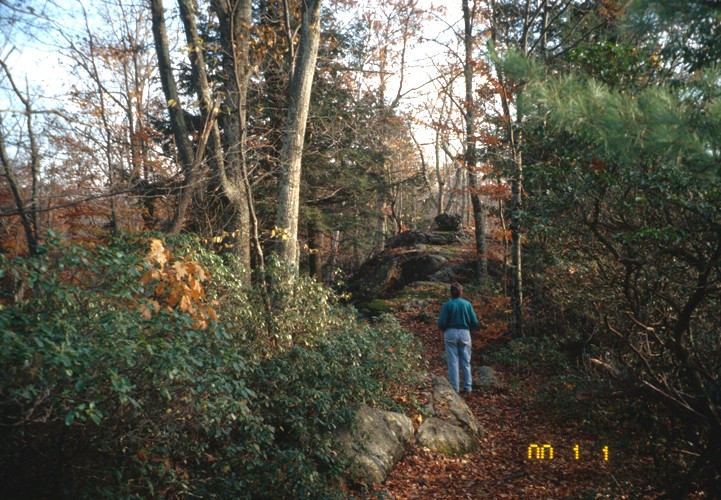
Generations of Carolyn Friedman’s family – the Jaggers – have cared for this land. Photo by the Friedman family.
Now the Friedmans are thinking about the next generations – both of their family and of the surrounding wildlife.
First steps, like creating a forest management plan, “made us think about the forest as a whole,” said Carolyn. “We thought, maybe it’s our responsibility to leave this corridor open.”
We thought, maybe it’s our responsibility to leave this corridor open.
Carolyn Friedman
Other environmental groups helped develop Carolyn and John’s conservation plans. The NextGen program, a partnership between The Nature Conservancy (TNC) and the Forest Stewards Guild, helped to support the Friedmans and other landowners in growing the next generation of forests and foresters. Sustained outreach by Hilltown Land Trust and partners helped guide them towards the milestone of a formal conservation restriction.
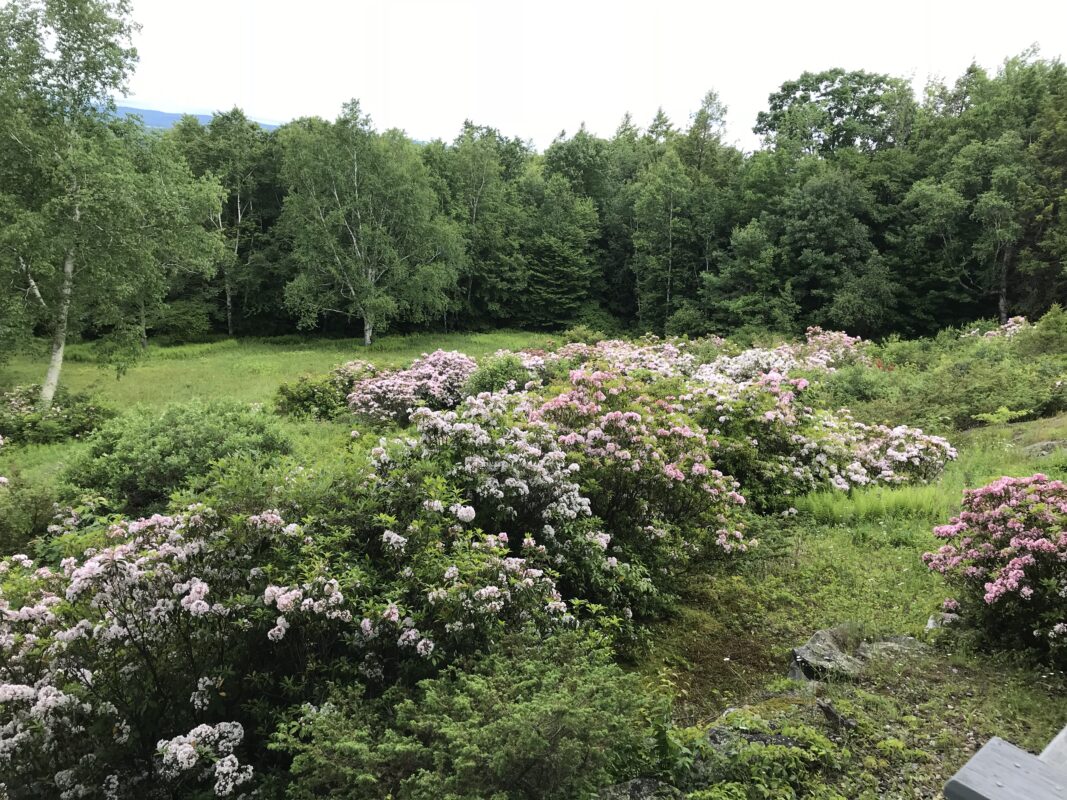
Carolyn’s father spent summers transforming overgrown tangles of junipers into forests and lush mountain laurel groves, earning the land the nickname “Jim Jagger’s Juniper Jungle.”
Partnerships for Connectivity
Through these robust partnerships, a small organization like Hilltown Land Trust is better positioned to conserve regionally important land like the Friedmans’.
This area of wildlife habitat is a region of focus for the Staying Connected Initiative (SCI), a bi-national partnership that works to maintain landscape connectivity across the Northern Appalachian – Acadian Region of the U.S. and Canada. Much of HLT’s service area falls within what is locally referred to as the Berkshire Wildlife Linkage, identified by SCI as being an essential piece of the habitat puzzle.
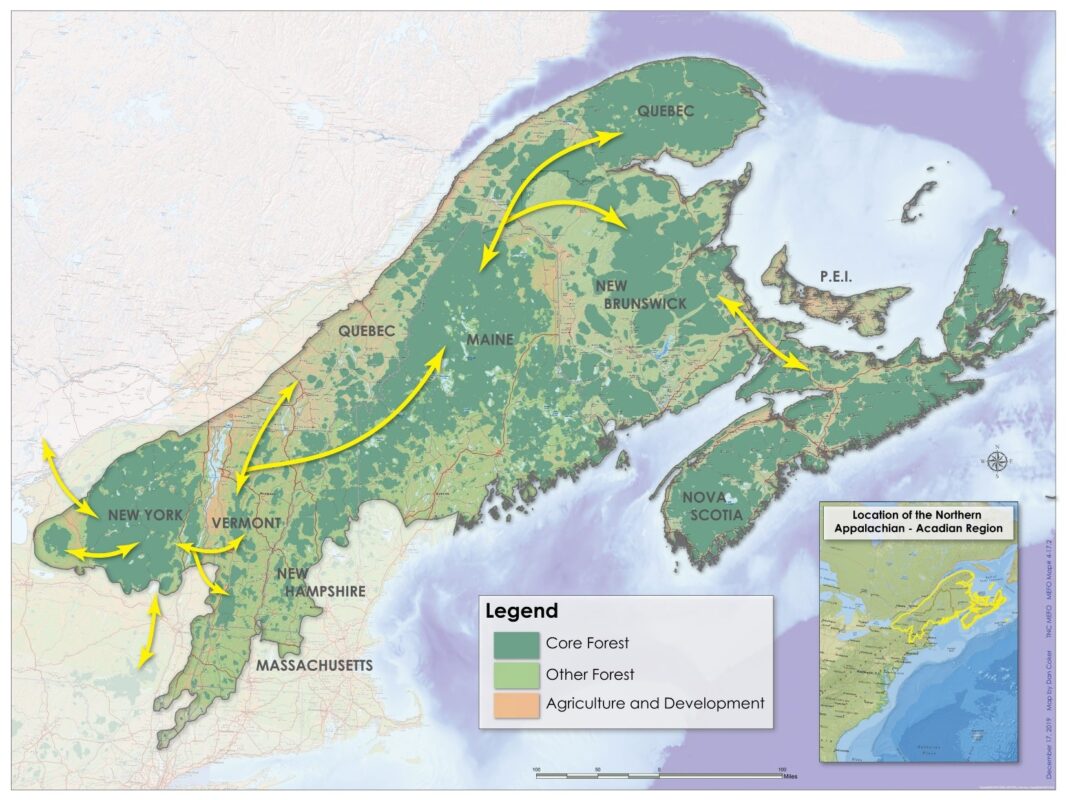
Connected forest habitat across the Northern Appalachian-Acadian Region of the US and Canada. Yellow arrows indicate major travel corridors for wildlife.
“Parts of this region, like the Green Mountains and the Adirondacks, are big areas where we can assume that wildlife move around freely,” said Laura Marx of TNC. “But those big areas rely on wildlife being able to move in and out – and under pressure from climate change, animals need to move farther, faster, than ever before.”
When traveling between habitat reserves, animals also face barriers like large cities and highways. The challenge, Marx says, is to ensure that wildlife can move between those refuges without them becoming islands.
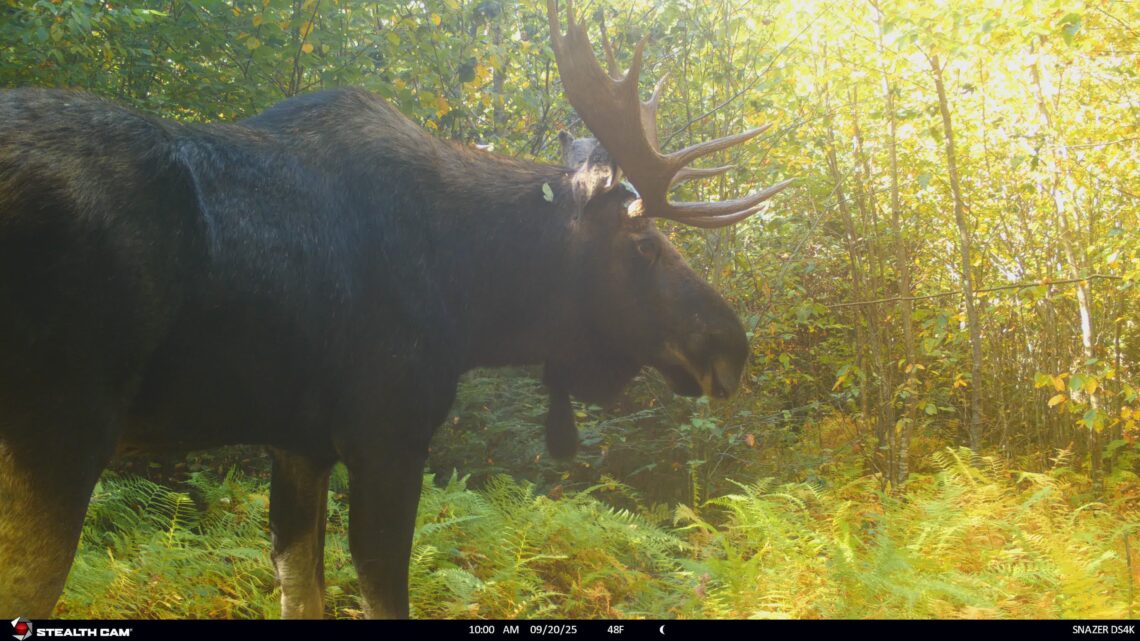
A moose on nearby conserved land in Huntington.
The Hilltowns provide a vital bridge on that wildlife highway, where animals can access plentiful forest cover and clean waterways.
“Here in western Mass, we get listed as a very fragmented part of the landscape. That’s true in terms of land ownership, but animals can really get where they need to go,” says Marx. “We don’t want to break connections through unsustainable development, but we’re starting in a great position.”
Deedholders like John and Carolyn have a vital role to play in keeping the Hilltowns open to wildlife. Marx emphasizes that there are many ways to protect the corridor without formal land conservation: simply maintaining land as forest or open wetland lets animals travel through safely.
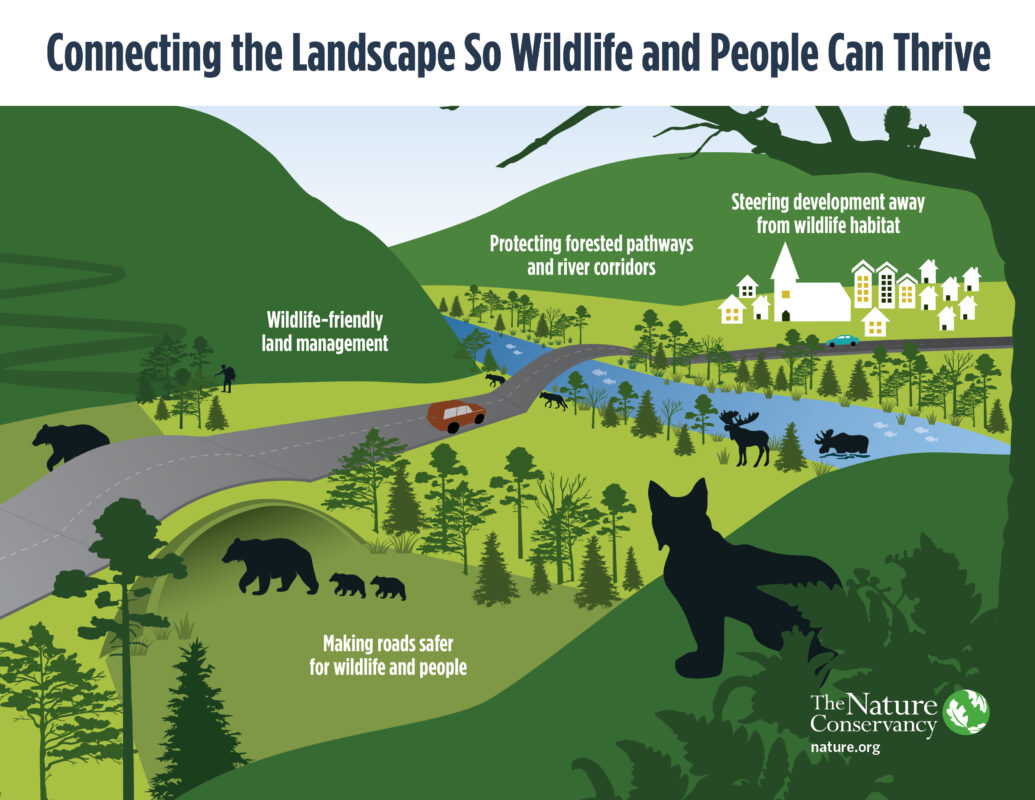
Interventions like these can keep habitat connected, and reconnect it where humans have broken the link. © The Nature Conservancy.
What’s next for the land
For John and Carolyn, who choose mostly passive management for their forest, part of their relationship with the land is watching changes over time.
“The big change is the dying,” Carolyn said of the diseased hemlocks, ashes, and beeches in her forest. She wonders how the place will change for all the woods’ inhabitants, humans included. “It’s a real loss, the wonderful feeling of walking through a dark hemlock forest.”
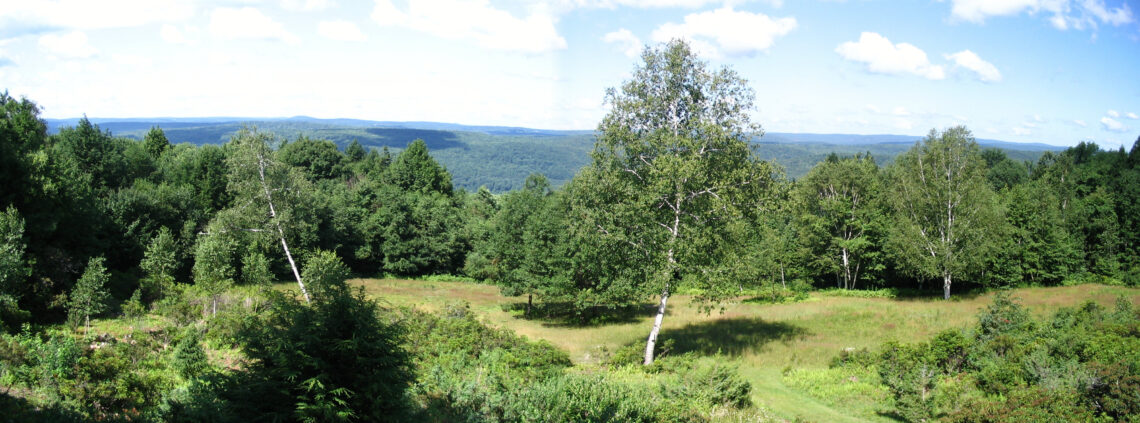
A summer view over the meadow and forest beyond. Photo by the Friedman family.
They also hope to persuade neighbors to consider conservation, which would strengthen the habitat network further. The next generations of their family continue to be interested in the land.
Carolyn and John are watching what unfolds at this place that connects across borders, species, and generations. “We’re going to let it do what it’s going to do,” said Carolyn. “We’re curious what’s going to evolve.”
Hilltown species need support from the people who share their habitats.
You can help us sustain a vibrant Hilltown community with a gift to Hilltown Land Trust. Renew your membership or make an additional gift to sustain the planet and ourselves.